Inside the Visionary Youth Centered Development Agenda of Nii Martey Dzata Obrempong I
Story By: Nii Okpoti Odamtten / Muhammad Faisal Mustapha…
In the historic coastal township of Teshie where Ga traditions echo through family courtyards and ancestral heritage remains a powerful pillar of identity a new era of community transformation is quietly taking shape within the Obediben division of the Gbugblah quarters.
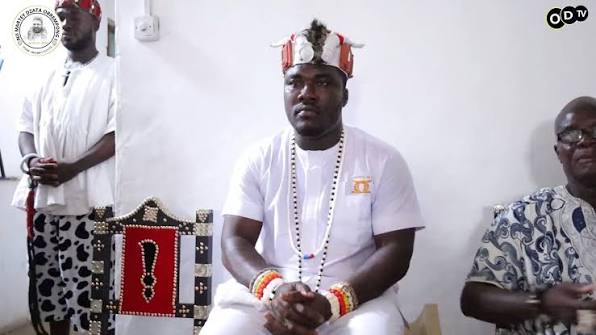
At the center of this unfolding chapter stands Nii Martey Dzata Obrempong I, the Obediben Mantse, a traditional leader who is redefining the role of chieftaincy in the modern age. With a vision rooted in both heritage and forward thinking leadership, he is championing a bold five year development agenda centered on the empowerment of young people.
In an exclusive interview with Nii Okpoti Odamtten and Muhammad Faisal Mustapha, the Obediben Mantse articulated a comprehensive roadmap designed to transform the fortunes of the community by investing in education, skills development, and cultural discipline.
Seated beneath portraits of his predecessors silent witnesses to generations of stewardship Nii Martey Dzata Obrempong I, spoke with clarity and purpose about the responsibilities of leadership in contemporary Ghana.
“Leadership today is not only about preserving the stool,” he explained.
“It is about preparing the youth to inherit it with strength, discipline, and opportunity.”
For the Mantse, the future of Obediben and the wider Gbugblah quarters is inseparable from the prospects of its younger generation.
“Teshie is full of brilliance,” he noted.
“But brilliance without direction can easily turn into frustration. The next five years must convert youthful energy into structured productivity.”
At the core of the Mantse’s development blueprint lies a commitment to transforming the potential of young people into tangible economic and social progress.
One of the most ambitious initiatives under consideration is the establishment of a Youth Skills and Entrepreneurship Hub within the Obediben community.
The center would offer training in:
° Digital technology and innovation
° Creative arts and cultural industries
° Carpentry and craftsmanship
° Fashion and textile design
°Marine related trades
° Small scale agribusiness and food production
The objective, according to the Mantse, is to cultivate a generation of creators and entrepreneurs capable of building their own opportunities.
“We cannot sit and wait for white collar jobs that may never arrive,” he said.
“Our mission is to produce innovators, creators, and employers from within Teshie itself.”
The initiative is expected to draw partnerships from private sector investors, development organizations, and members of the Teshie diaspora eager to contribute to community progress.
Beyond vocational training, the Mantse is also advocating the creation of a structured mentorship and scholarship network designed to support talented but under resourced students from the Gbugblah quarters.
The mentorship program would connect young students with accomplished professionals from Teshie both locally and internationally.
“When a child sees someone from his own community become a lawyer, a doctor, or an engineer,” he reflected,
“that dream suddenly becomes attainable.”
Scholarships will target academically gifted students facing financial barriers, ensuring that talent within the community is not lost due to lack of opportunity.
While economic development remains central to his vision, Nii Martey Dzata Obrempong I insists that cultural identity must remain the foundation of community progress.
“Development without identity is dangerous,” he emphasized.
“We must modernize, but we must do so as proud Teshie people.”
To reinforce this principle, the Mantse plans to intensify:
° Community dialogue forums
° Youth leadership summits
° Cultural orientation initiatives
°Engagement with traditional authorities and elders
These initiatives aim to cultivate a renewed sense of discipline, responsibility, and pride among the youth.
The Mantse addressed pressing issues confronting many urban communities youth unemployment, drug abuse, and the erosion of respect for traditional institutions.
Rather than condemnation, he believes the solution lies in constructive engagement.
“You cannot condemn a young person into change,” he said.
“You must include them in building the solution.”
Proposed strategies include:
°Community based rehabilitation initiatives
° Sports and recreational development programs
° Structured youth participation in local decision making
Within the next five years, the Obediben Mantse hopes to spearhead improvements in sanitation, drainage infrastructure, and the transformation of neglected public spaces across the Gbugblah quarters.
His vision includes converting underutilized areas into youth centers, training grounds, and safe recreational facilities.
“A community that invests in its environment invests in its dignity,” he remarked.
Central to the development agenda is a strong commitment to the empowerment of women and girls.
Through skills development programs, microfinance access, and leadership training, the Mantse hopes to ensure that young women are fully integrated into the community’s economic future.
“When you empower the girl child, you strengthen the future family,” he observed.
“And when families are strong, communities become stable.”
Perhaps the most consistent message throughout the interview was the importance of collective action.
The Mantse believes meaningful transformation cannot be achieved by traditional authority alone. He is therefore calling on community stakeholders including elders, assembly members, business leaders, faith institutions, and diaspora networks to unite behind the vision.
“The next five years will redefine our destiny,” he declared.
“But that future will only be achieved if we move forward together.”
As Teshie continues to evolve within the rapidly expanding urban landscape of Greater Accra, the development vision of the Obediben Mantse represents a compelling blend of cultural preservation and forward looking leadership.
For Nii Martey Dzata Obrempong I, success will ultimately be measured not by monuments or titles, but by the strength of the next generation.
“My greatest achievement will not be statues or ceremonies,” he concluded.
“It will be seeing the young men and women of Teshie standing confidently in the world, knowing they were prepared at home.”
For the people of Obediben, the Gbugblah quarters, and the broader Teshie community, the coming years may well determine whether this vision evolves from aspiration into lasting transformation.
If conviction, leadership, and community resolve are any indication, the foundation for that future has already been laid.