KGL Chairman Alex Apau Dadey Challenges Private Sector to be Value Creators in National Development

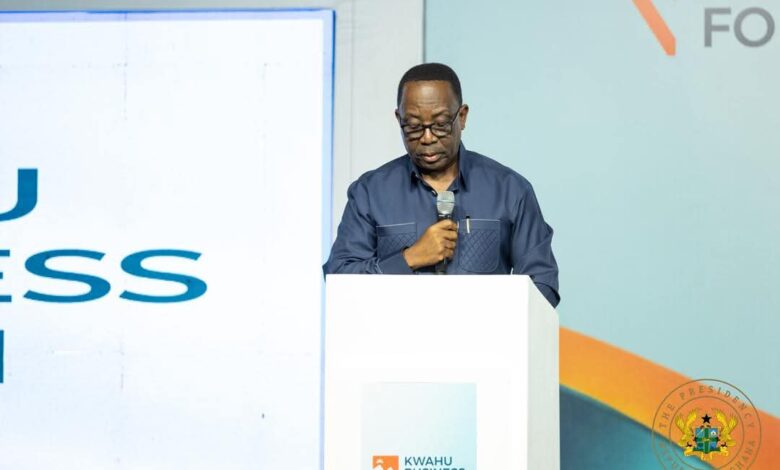
The Executive Chairman of KGL Group, Mr Alex Apau Dadey, has called for a fundamental shift in how public-private partnerships are approached in Ghana and across Africa, urging stakeholders to prioritise value creation over short-term gains. Speaking at the Kwahu Business Forum, Mr Dadey emphasised that sustainable economic growth on the continent will depend not merely on the expansion of private enterprises but on the adoption of responsible business practices anchored on good corporate governance, responsible corporate citizenship, and long-term sustainability.
“When the private sector works with government, the question should not be: ‘How much can we take?” The question should be: “How much value can we create together?” That is the difference between a contractor and a corporate citizen. And Ghana needs more corporate citizens.”
Drawing from KGL Group’s model of business, he highlighted that corporate citizenship must be viewed not as a peripheral activity, but as a core business strategy—one that ensures sustainability, builds public confidence, and strengthens institutional resilience. In emerging markets such as Ghana, he stressed, trust is not an abstract concept but a critical economic asset that underpins long-term success.
Mr Dadey further underscored the need to redefine public-private partnerships, noting that genuine collaboration must deliver measurable outcomes, improved service delivery, and sustained value for both the state and citizens. Anything short of this, he cautioned, risks undermining public trust and weakening the very systems such partnerships are intended to strengthen.
He also called for a deliberate shift in how African businesses are built, urging leaders to move beyond personality-driven enterprises towards systems, structures, and institutions that can endure beyond their founders. According to him, the true test of a business is not its immediate success but its ability to outlive its founders, adapt over time, and continue to serve society.
“If Africa is serious about building business champions, we must move from personality to process, charisma to governance. The real test of a great African business is this: Can the business outlive the founder, outgrow the founder, and out-serve the founder?
Addressing policymakers, Mr. Dadey highlighted the importance of creating an enabling environment that supports credible local businesses through fairness, policy consistency, and transparency. He noted that sustainable national development is best achieved when indigenous enterprises are empowered to grow, compete, and reinvest with confidence.
To fellow business leaders, he delivered a strong call to action—emphasising discipline, accountability, and ethical conduct as non-negotiable pillars for building trust and credibility. He urged the private sector to align ambition with responsibility by investing in governance, respecting regulatory frameworks, and contributing meaningfully to the communities in which they operate.
Concluding his remarks, Mr. Dadey challenged stakeholders to move beyond conversations and commit to building institutions that will drive long-term national progress. He reiterated that the future of Africa’s business landscape will be defined not by companies that merely generate profit, but by those that build trust, create value, and contribute meaningfully to society.