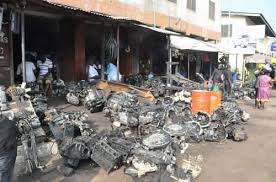
The directive by the Abossey Okai Spare Parts Dealers Association giving foreign retailers three days to shut down their shops or face enforcement action has sparked widespread public debate.
In a statement, the association argued that foreign nationals are not permitted to engage in retail trade under Ghana’s laws and must therefore comply or vacate their outlets in the popular spare parts hub. The move, however, has been met with divided opinions among Ghanaians, with many taking to social media to express their views.
Some commenters criticized the association, accusing local traders of unfair pricing and exploiting customers. One user wrote: “A phone charger is sold to a Ghanaian trader for GH₵10, and the same trader sells it to us for GH₵45 or GH₵50. Spare parts dealers want to kill us with overpricing.” Another added: “Our own people are overpricing spare parts, yet they are driving foreigners away.”
Others pointed out that foreign traders play a key role in sustaining the local economy by ensuring a steady supply of goods. “If these people leave your country, it will affect your economy. They bring the goods, meaning they are key factors,” one user cautioned.
Meanwhile, some defended the association’s stance, stressing that the law bars foreigners from engaging in retail trade in Ghana. “Nobody is blocking anyone from doing business, but remember retail is strictly reserved for Ghanaians,” another commenter noted, while others raised concerns about whether foreign traders pay the required taxes.
The development has also reignited questions about larger players in the retail space. One user asked, “What about the China malls?”—highlighting perceptions of selective enforcement.
The controversy comes amid long-standing tensions between Ghanaian traders and foreign retailers, particularly Nigerians, over retail dominance and pricing. Critics fear that if foreigners are forced out, local traders may further hike prices, worsening the cost of living for ordinary citizens.
As the three-day deadline draws closer, Ghanaians remain split: some support the association’s call for enforcement of the law, while others worry about the economic consequences and the potential for increased hardship on consumers.